

Vitamin D deficiency is one of the most common nutrient gaps worldwide. Even if your levels are “normal,” they may not be optimal for long-term health. This guide explains how to interpret your vitamin D test results. It helps you find your personal target range. You will learn how to keep levels where they need to be for bone strength, immunity, mood, and healthy aging.
Quick Reference: Here’s a visual guide to the optimal vitamin D range, why it matters, and how to maintain it.
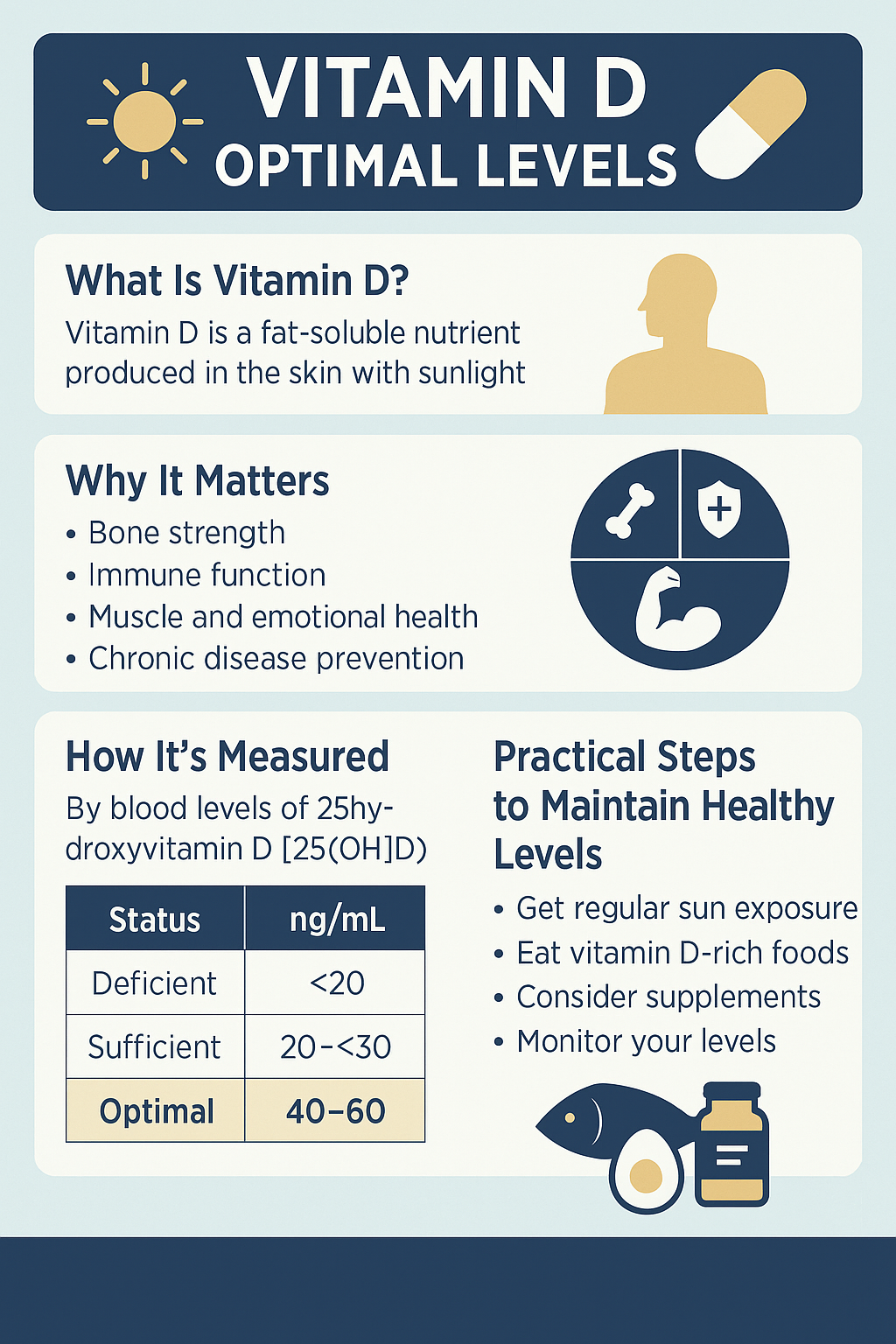
What Is Vitamin D?
Vitamin D is a fat-soluble nutrient that functions like a hormone in the body. It exists in two main forms:
- Vitamin D2 (ergocalciferol): Found in some plants and fortified foods.
- Vitamin D3 (cholecalciferol): Produced in the skin when exposed to sunlight and present in animal-based foods.
Both forms are converted in the liver into 25-hydroxyvitamin D [25(OH)D], the form measured in blood tests.
Why Vitamin D Matters
Vitamin D’s role extends far beyond bone health. Research shows it supports:
- Bone strength: Promotes calcium and phosphorus absorption, preventing osteoporosis.
- Immune function: Helps defend against infections and modulate inflammation.
- Muscle health: Maintains muscle strength and coordination, reducing fall risk.
- Mood regulation: Linked to lower depression risk and better emotional well-being.
- Chronic disease prevention: Associated with reduced risk for cardiovascular disease, certain cancers, and autoimmune conditions.
How Vitamin D Is Measured
The most accurate assessment is a blood test for 25-hydroxyvitamin D [25(OH)D].
Results are reported as:
- ng/mL (nanograms per milliliter) — common in the U.S.
- nmol/L (nanomoles per liter) — common internationally
(To convert: 1 ng/mL ≈ 2.5 nmol/L)
Why this test matters: Measuring 25(OH)D reflects total vitamin D from both sun and diet. This method is preferred over testing active vitamin D (1,25(OH)₂D). Testing active vitamin D can be misleading because it fluctuates due to factors like calcium balance and parathyroid hormone activity.
Vitamin D Status Ranges
| Status | ng/mL | nmol/L |
|---|---|---|
| Deficient | < 20 | < 50 |
| Insufficient | 20–29 | 50–74 |
| Optimal | 40–60 | 100–150 |
| Potentially High | 60–100 | 150–250 |
| Risk of Toxicity | > 100 | > 250 |
Key insight: While 20 ng/mL may prevent rickets, many experts recommend 40–60 ng/mL (100–150 nmol/L) for optimal immune, bone, and overall health.
Causes of Low Vitamin D
- Limited sun exposure (especially in winter or in northern latitudes)
- Darker skin pigmentation (melanin reduces vitamin D production)
- Older age (skin’s ability to synthesize vitamin D declines)
- Higher body fat (vitamin D can be sequestered in fat tissue)
- Digestive disorders (e.g., celiac disease, Crohn’s)
- Certain medications (e.g., glucocorticoids, anti-epileptics)
How to Maintain Healthy Vitamin D Levels
- Get sensible sun exposure: Aim for 10–30 minutes of midday sun several times per week, adjusting for skin tone, location, and season.
- Include vitamin D-rich foods: Fatty fish (salmon, sardines, mackerel), egg yolks, fortified dairy and plant-based milks.
- Supplement when needed: Many adults benefit from 1,000–2,000 IU/day of vitamin D3, especially in winter or when sun exposure is limited. Higher doses should only be taken under medical supervision.
- Monitor your levels: Test at least annually, or more often if adjusting your diet or supplements.
Inclusivity & Individual Considerations
- Skin tone: Darker skin requires longer sun exposure for the same vitamin D synthesis.
- Geography: Those at high latitudes may need year-round supplementation.
- Age & health status: Older adults, postmenopausal women, and individuals with chronic conditions may have different target levels.
Risks: Don’t Overdo It
Excessive vitamin D intake, usually from supplements, can cause hypercalcemia (high calcium levels), leading to kidney damage, nausea, weakness, and heart rhythm problems.
Toxicity is rare and almost never caused by sunlight.
FAQ
Q: What’s the fastest way to raise my vitamin D levels?
A: A combination of safe sun exposure, vitamin D-rich foods, and supplements (if needed) can raise levels effectively.
Q: Can I get enough vitamin D from diet alone?
A: It’s possible but difficult without fortified foods or supplements — most natural sources have modest amounts.
Q: What time of day is best for vitamin D from sunlight?
A: Midday sun exposure tends to be most effective for vitamin D production, but should be balanced with skin cancer prevention.
Bottom Line
Vitamin D is essential for bone, immune, muscle, and emotional health, and may lower the risk of chronic diseases.
Aim for 40–60 ng/mL (100–150 nmol/L) to support optimal health — not just to avoid deficiency.
Combine sensible sun exposure, nutrient-rich foods, and supplements when necessary, and track your levels to stay in the ideal range.
Track and understand your vitamin D results with HealthMatters.io — your personal lab result dashboard.
Medical Disclaimer
This article is for informational purposes only and is not a substitute for professional medical advice, diagnosis, or treatment. Always seek guidance from a qualified healthcare provider with any questions you have about your health, test results, or supplement use.
 blog.healthmatters.io